
How one pilot project could inspire a green building revolution
The European Commission’s new sustainable buildings framework, Level(s) is highly ambitious. It aims to tackle climate change, create a better environment and improve resource use by measuring the environmental impact of a building across its entire life cycle.
All this sounds very impressive, but how do you begin to convert this dramatic rhetoric into reality? This is what the pilot phase of Level(s) is intending to demonstrate.
You build it. Literally. You lay the foundations, put up the walls and put on the roof. And at every step of the way, you collaborate and share what you have learned with everyone who can make a difference on a national, regional and global level. It’s about scale. One great sustainable Level(s) pilot project building could inspire many more.
In 2017, our Knauf Insulation Experience Center in Slovenia was selected to participate in the testing phase for Level(s). Now, six months into construction, the two storey 640m2 building is becoming a sustainability showcase for everyone involved.
And there are a lot of people involved, all contributing valuable expertise or benefiting from the pilot project. There are Commission representatives assessing the research; support from WorldGBC’s Europe Regional Network (ERN) and forensically detailed assessments by the German Sustainable Building Council (DGNB).
The results of this collaborative effort are already being felt with architects, policy-makers and other building sector stakeholders throughout the supply chain closey monitoring our experience of testing Level(s).
What is particularly exciting is the fact that the Slovenian government is looking into Level(s) as a way to reshape the country’s building sustainability strategy.
Saša Galonia, Head of Construction Division Spatial Planning, Construction and Housing Directorate at the Slovenian Environment Ministry said: “We are delighted to observe this pilot project from initial design to final completion. This project represents a reality check for the application of new sustainability requirements in our country.”
Josefina Lindblom at the Unit of Sustainable Production, Products and Consumption at the European Commission for DG Environment, commented that Level(s) test phase offers a unique opportunity to “create an ambitious long-term vision for a better sustainable built environment in Europe”.
At Knauf, we are particularly excited about the potential of Level(s) to transform Europe’s building market. Vincent Briard, our Sustainability and Product Regulatory Affairs Director, stated: “Level(s) could pave the way for an exciting new life cycle-focused legislative approach to sustainable buildings in Europe. Certainly, that’s our hope because at Knauf Insulation life cycle assessments and Environmental Product Declarations have always been at the heart of everything we do.”
Audrey Nugent, ERN’s Senior Policy Adviser, echoes the long-term importance of this life cycle approach to sustainable buildings. “Level(s) will enable governments across Europe to incorporate the concept of the circular economy into their own national plans and ensure these are aligned with European priorities and efforts to tackle climate change.”
Then there is DGNB certification system for sustainable building. We are working to ensure the Knauf Insulation Experience Center is the first building in Slovenia to be certified by DGNB — ideally at Gold level — and this has meant an intense focus on the highest standards of sustainable building best practice.
Finally, for Knauf Insulation, the pilot has obviously been an incredible opportunity to demonstrate green building leadership. As observed by our technical support lead Primož Bernard: “The process of building this centre involves a level of sustainability detail that is incredibly complex and hugely inspiring. The standards that have been prescribed are the highest I have ever worked with and achieving them is an amazing education for everyone involved.”
The new two-storey Knauf Insulation Experience Center is next to Knauf’s Škofja Loka plant in Slovenia and will feature areas for demonstrations, digital experiences, show-rooms, offices, technical rooms, lecture halls and meeting rooms. Work will be completed later this year.
Do you know the space requirements in your office?
Are you happy with your office space in work? Do you know your space requirements in order to work in a safe environment both physically and mentally!
Well first of all what is a workspace, any location where a person’s work is performed, including traditional office spaces and non-traditional office spaces (e.g., home offices, vehicles, and temporary locations), as well as the furniture, accessories, equipment, environmental conditions, and psychosocial workplace factors within these locations.
There is no right and wrong answers to office space requirements but here are some aspects to consider when thinking about office space:
Nature of work – what kind of work do you do? Are you out on the field, doing site visits, consultations or confined to the office all day long. Depending on the kind of job specification the difference in size of office space. Office workers who perform their job at their workstation all of the time may feel that a smaller work space claustrophobic.
Cultural aspects influence out perception of the type of space that we expect and are comfortable working in. For Europeans adequate personal space is a factor.
A corporate climate – our perception of a designated space is a matter of comparison. Employees generally accept the fact that those at more senior levels have a bigger work station or office space. Although this is changing with more open plan offices, sharing work stations and office space.
Individual perception is different for everyone and can have a psychological meaning. It is only natural for people to look for more comfortable space. It might signify importance, authority or power. In the workplace the amount of our personal space is often linked with out status within the organisation.
Anthropometry or body dimensions is a factor that has to be taken into consideration for an employees office space. So it really depends on the size and shape of an employee in order for the company to accommodate.
It is very important for us at Elearn to make sure that you work in a comfortable working environment. We are always here to train you and your staff to be health and safety aware and get certified. Take the VDU Online Work Stations Analysis course and evaluate your health and safety at your work station.
Tragedy in the Workplace
A good reason to always have a safety procedure in place.
Most tragedies occur because there is no safety training or awareness.
Here are two true stories where there was negligence and mistakes made and the result was death.
The first tragedy happened when the contractor was on the premises to check out a malfunctioning security camera located at some height in the front of the company premises. The contractor was killed when the basket that he was elevated in to reach the camera fell off the forklift. The forklift driver had selected the basket that was not suitable to be in the forklift. The basket became unbalanced and fell off when the weight shifted. As as result of this, the man died and the occupier of the building and the employer were then prosecuted.
In another incidence, an employee was killed when the pallet racking collapsed on him and he was struck with fallen cartons. This occurred because the racking leg at ground level was damaged and not protected. A forklift struck the unprotected leg resulting in cartons falling from a height onto the employee. Pallets of stock at a high level fell to the ground and the forklift driver was struck by the fallen cartons, suffered head injuries and died as a result.
The solution that should have been in place was to make sure that there was protection of the racking components for impact. The forklift driver should have been trained in the safe and proper use of pallet racket system.
FACT: “47 people died in the workplace in 2018”
order to try to prevent such a tragedies, a risk assessment should be completed and a safety system be used. Platforms and cages should always be designed, structured and tested. Those without controls and not properly integrated should be avoided. All staff trained with safety awareness certificates . You can take one of our online safety courses and be certified in a matter of hours.
Employee Safety Procedures in the Workplace
So there’ll always be employee safety procedures. They’re not really ridiculous, but not having them would be. No matter what job you work in, it pays to be alert when it comes to health and safety. Some jobs are obviously more dangerous than others, but accidents can happen in any type of workplace. The best policy is always to prevent an accident occurring in the first place rather than trying to deal with the consequences afterwards.
As an employee, what can you do?
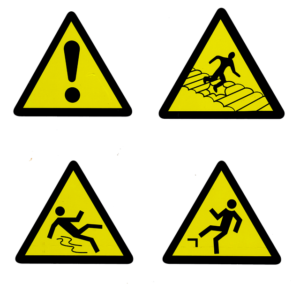
Talk to your employer
Discuss any concerns you might have in relation to safety, health and welfare. If you have never seen it, ask your employer for a copy of the company safety statement A Company safety statement is the basis for the management of safety and health in the workplace and sets out an action programme for safeguarding employees at work.
Be alert
Be continuously on the lookout for anything that could lead to an accident. Be aware of the behaviour of your colleagues too. An accident caused by a co-worker could easily impact on others so if someone is behaving recklessly, bring it to the attention of your employer.
Don’t take risks
If you feel that something is unsafe, then stand back and think about the best way to deal with it. If you can’t deal with it tell your employer. Workplace accidents are often the result of human behaviour, i.e. cutting corners, rushing a job, taking chances…..think about the consequences of a bad accident and make sure you do everything you can to avoid it.
Don’t make the mistake of thinking that the responsibility for worker safety, health and welfare rests solely with your employer. Under the law, employers certainly have a wide range of duties….but so do employees, including those that have part-time or temporary roles, regardless of any employment or contractual arrangement they may have. All employees must:
- Comply with relevant laws and protect their own safety and health, as well as the safety and health of anyone who may be affected by their acts or omissions at work.
- Ensure that they are not under the influence of any intoxicant to the extent that they could be a danger to themselves or others while at work.
- Cooperate with their employer with regard to safety, health and welfare at work.
- Not engage in any improper conduct that could endanger their own safety or health or that of anyone else.
- Participate in safety and health training offered by their employer.
- Make proper use of all machinery, tools, substances, etc. and of all Personal Protective Equipment provided for use at work.
- Report any defects in the place of work, equipment, etc. which might endanger safety and health.
You will find a wide range of useful guidance and information throughout this website. For example, did you know that….
…..accidents involving workplace vehicles cause the greatest number of workplace deaths?
.….slips, trips and falls account for about one fifth of all workplace accidents?
…..approximately one third of all reported accidents are in relation to manual handling injuries?
Take some time to find out more about how to contribute to a safe and healthy workplace. Be aware of your responsibilities and do everything you can to meet them. If you feel that your employer is not meeting his/her duties with regard to creating and maintaining a safe and healthy workplace, you have the option of making a complaint.
Make sure you are safety certified in work, take one of our online courses today.
What is the No 1 Rule of an Employer?
Look after your employees and they will look after your Business. A happy employee is a more productive employee
There are so many reasons to look after your employees in the work place and make sure that they are happy.
Research suggests that a happy person works better and lives better. It’s a stressful world around us and sometimes it can be difficult to stay happy in all aspects of life, and to get a good work-life balance. Of course, working better can further improve your employees’ happiness if it leads to promotions or pay rises. So why not make them happy and look after their wellbeing. In return you should see your own benefits with reduced absence management levels.
So how can you look after their health and wellbeing at work?
- Talk: It’s a simple action done all day – but the important part is talking about what matters. It can help hugely in general wellbeing to just learn to let it out and deal with those times with others, rather than alone no matter how small. Everyone has moments when they feel overwhelmed and sometimes it helps to just talk to someone.
- Eat Well: The better your employees eat the better they will feel about themselves and everything around them, mentally and physically. Provide a free fruit day in the office to promote healthy eating.
- Have fun with friends and family: Spend time with those you are close too, encourage laughing as it is infectious!
- Stay Active: Employees don’t need to run marathons but they can just go outside and take a stroll. They’ll get fresh air, they’ll get exercise and they’ll enjoy the sun (when it’s there!). There are experts that believe exercise releases chemicals in the body that make people feel good – so go grab those walking shoes!
- Do something you love: It doesn’t matter what it is just something it!
- Sleep: People do not get enough of this; there is always something that needs to be done, something they want to watch on TV, but trying to ensure and encourage your employees to get enough sleep is essential in their wellbeing.
Everyone deserves to get the most out of themselves and their life and it’s amazing how one thing can affect everything else around you in your personal and professional life.
Always have a health and safety plan in place because you never know when you will need to put this plan into action. Educate and inform employees of the dangers in a work place.
Are you safety aware in the work place?
Take a moment to think about how your employees look after their wellbeing and what you do as a company to help.
European Food Safety Authority (EFSA)
What does EFSA do?
The European Food Safety Authority (EFSA) provides independent scientific advice on food-related risks.
EFSA issues advice on existing and emerging food risks. This advice informs European laws, rules and policymaking – and so helps protect consumers from risks in the food chain. Its remit covers:
- food and feed safety
- nutrition
- animal health and welfare
- plant protection
- plant health.
EFSA’s work involves:
- gathering scientific data and expertise
- providing independent, up-to-date scientific advice on food safety issues
- communicating its scientific work to the public
- cooperating with EU countries, international bodies, and other stakeholders
- boosting trust in the EU’s food safety system by providing dependable advice.
Structure
EFSA is governed by a management board with 15 members. The board members act in the public interest. They do not represent any government, organisation or industry sector.
The board sets EFSA’s budget and approves its annual work programme.
EFSA’s executive director is responsible for operational and staffing matters. He also draws up the annual work programme together with the Commission, the European Parliament and the EU countries.
The advisory forum advises the executive director. In particular, it advises him on drafting the proposal for the work programme.
The forum is made up of representatives of national bodies responsible for risk assessment in the EU countries. There are also observers from Norway, Iceland, Switzerland and the Commission.
EFSA’s scientific work is led by its scientific committee and its 10 panels, made up of leading scientists.
If more specialised knowledge is needed, a panel may set up a working group. These groups include both EFSA scientists and external experts.
EFSA also works closely with other EU agencies active in the field of health and safety issues relating to humans, animals and the environment:
- European Medicines Agency (EMA)
- European Chemicals Agency (ECHA)
- European Centre for Disease Prevention and Control (ECDC)
- European Environmental Agency (EEA)
- European consumers – among the best protected and informed in the world about food chain risks
- EU institutions and national governments in charge of managing public health issues and authorising the use of food and feed products.
A Safety Statement Will Make You Sigh With Relief
Safety Statements in the workplace
What is a safety statement?
A safety statement is a company’s commitment in writing to a safe and healthy workplace.
The Safety statement is a legal requirement under the Safety Health & Welfare at Work Act 2005.
Section 20 of the Safety, Health and Welfare at Work Act 2005 requires that an organisation produce a written programme to safeguard:
- the safety and health of employees while they work
- the safety and health of other people who might be at the workplace, including customers, visitors and members of the public
The Safety Statement should influence all work activities, including
- the selection of competent people, equipment and materials
- the way work is done
- how goods and services are designed and provided
The Safety Statement must be site specific and be based on a written risk assessment. It cannot be generic and must be communicated in a form manner and language that is likely to be understood by all concerned.
What are the benefits of having a safety statement?
An organisation will see benefits such as,
- Legal Compliance
- Improved safety performance which will lead to a reduction in lost working time
- Improved worker morale
- Reduced chance in insurance premium hikes *
- Reduced chance of legal costs.
* An insurance company may refuse cover if you do not have a valid safety statement
Who should have a safety statement?
All employers, self-employed persons and sole traders
How often should it be reviewed?
At least annually or in the event of changes to the business operations, personnel or working environment.
If you want to get Safety Statement Certified and be complaint with regulations click here
You need a Safety Management System (This is Why)
Safety Management System
What is a safety management system?
A safety management system is in short, a way for an organisation to ensure that they are, planning, acting, measuring and improving their approach to health & safety on an ongoing basis.
What are the benefits to having an accredited safety management system?
An organisation will see many benefits such as, increased safety performance, improved work morale, reduced chance in insurance premium hikes and importantly the chance of legal costs. This can be detrimental to a company and can result in closure of business.
What are some of the accredited safety management systems an organisation can aspire to?
- ISO 45001
This ISO standard was developed by a committee of occupational health & safety experts and follows the same approach to management control as ISO 14001 (Environmental) and ISO 9001 (Quality). It takes into account other internal standards such as OHSAS 18001 and international Labour Organisation Guidelines.
- Safe T Cert (Construction)
Safe-T-Cert is a certification scheme designed for certifying the Safety Management Systems of contractors working in the construction industry. The Scheme’s objective is to improve health and safety management by providing objective standards and certifying those contractors whose safety management systems have been assessed, and can demonstrate that they:
- Are in line with the ILO guidelines for safety management systems
- Meet the basic requirements for training and competence
- Implement an occupational health and safety management system which meets the requirements of the organisation – incorporating continual improvement.
- Address relevant national legislation
- Demonstrates commitment at all levels within the organisation
All organisations need to have a safety management system in place in order to safeguard them and their employees. There are many injuries caused in work and it is vital that the correct training and procedures are put in place in order to minimise the risk. We have lots of online and onsite courses available for you and your work colleagues.
Allergies on the Increase
The increase in allergies in todays society is due to a numbers of factors.
Some experts say that excessive cleanliness is responsible for an increased risk of developing allergies. There is no doubt that food allergies have increased over the past decade and there is a growing awareness around food allergies. According to Safe Food, 17 million of Europeans suffer from a food allergy!
A food allergy is when a person produces a range of symptoms, which can vary from mild itching to severe breathing difficulties and they usually appear straight after eating food.
The fist stage of the process is called sensitization when the immune system’s memory registers the eaten food as a threat to the body. Antibodies to that food are produced and at a subsequent encounter these antibodies connect with the foods proteins and trigger the release of certain substances in the body such as histamine. Allergen reactive T2 cells play a triggering role in the activation and /or recruitment of antibody producing B cells, a process that is involved in the allergic inflammation. This is attributed to certain genes and the modern urban lifestyle and food choices that we now have.
The theories behind this increase are speculative but include the following suggestions, Atmospheric pollution, great use of detergents and chemicals, sterile cleaning products, carpets, curtains, soft furnishings and central heating at home, overuse of antibiotics in infants and over processed food.
The new legislation called the Food Information for Consumers Regulation increases a growing awareness about food allergies.
So will people continue to become allergic due to their immune system being depleted. Time will tell us if this is the case.
Here are some interesting facts about food allergies in Ireland.
- 2-20% estimates of how common food intolerances are vary widely.
- Anywhere from 1-23 in every 10,000 people could be intolerant to food additives.
- 1 in 20 adults in Ireland are estimated to be lactose intolerant.
- 28% of the Irish population suffer from some type of allergy.
- 15% need to see a specialist over their condition.
- Food allergy is particularly common in children.
- 1 in 50 children have a life threatening nut allergy.
- 10% of children have more than 1 allergic disorder.
- Allergen prevalence has more than doubled in the last 20 years.
- 30-35% of Irish people suffer from some sort of allergy in their lives.
Check out our HACCP Food Safety 1 and HACCP Food Safety 2 Certified Online Courses.